The True Story of the Wrongful Conviction and Execution of William Wilson, the Unsolved Murder of Rachel Taylor, and the Serial Sexual Offender in the Shadows of Both Cases
After exchanging pleasantries with the driver, Rose Haber stepped off the bus in Pittsburgh’s East Liberty and began the short walk home. It was a few minutes after 11pm on July 12, 1941. As soon as the bus had pulled away, a man stepped from the shadows behind Rose and struck her over the head with a heavy weapon.
Badly injured, she was able to tell passersby that she had been attacked by a well-dressed young white man. The sole witness to the attack, who had watched from her bedroom window next to the bus station, later positively identified a man who fit that description as the attacker. Rose Haber died unexpectedly the next day. Her assault was now a murder.

With only a description to go on, police struggled to identify the attacker. Weeks passed. A variety of suspects were detained and released.
In early September, authorities in Central Pennsylvania notified Pittsburgh police that a man matching the description Haber provided had been arrested in Lock Haven in connection with numerous assaults in Clinton County and Centre County over the previous months. Those assaults – all of them involving unaccompanied girls or women attacked from behind and struck over the head late at night – were strikingly similar to Haber’s assault. That man was Hoy Houck.
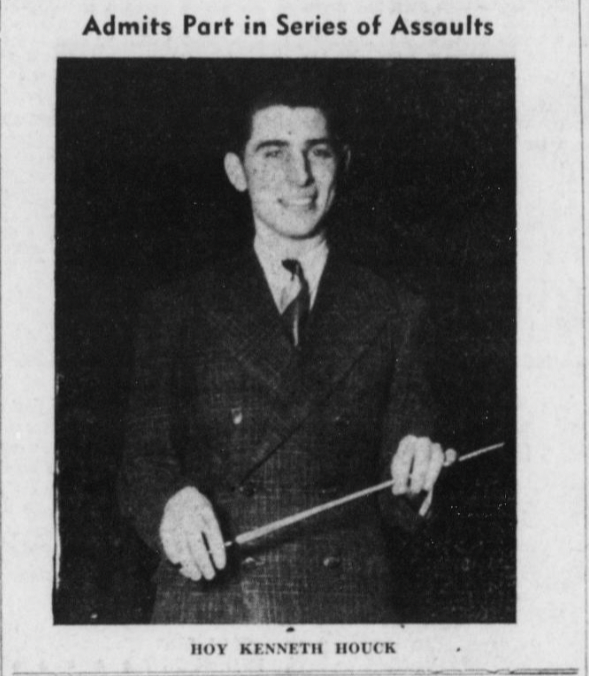
After traveling to Lock Haven to question Houck, Pittsburgh police brought him back to Allegheny County and charged him with murder. Newspaper reports indicated that Ella Kennedy, who had witnessed Haber’s attack, accompanied police and positively identified Houck as her attacker.
Though Houck acknowledged that he regularly traveled to Pittsburgh on business, he denied being there on July 12 and denied killing Haber. He offered a series of alibis, initially claiming he was with friends in Bellefonte, before claiming that he was at work in an unspecified grocery store in Clinton County, and finally that he was working at the A&P in Bellefonte. Unable to disprove those alibis, Pittsburgh authorities were unable to pursue charges.
Six months later, police arrested another man following a series of assaults on Pittsburgh’s North Side. That man was William Wilson, a homeless Black man from Alabama. Though he confessed to the crime, his initial confession was inconsistent with the evidence. After extensive and leading questioning, including three visits to the crime scene in which police, intentionally or unintentionally, outlined what had happened, Wilson provided a more acceptable confession.
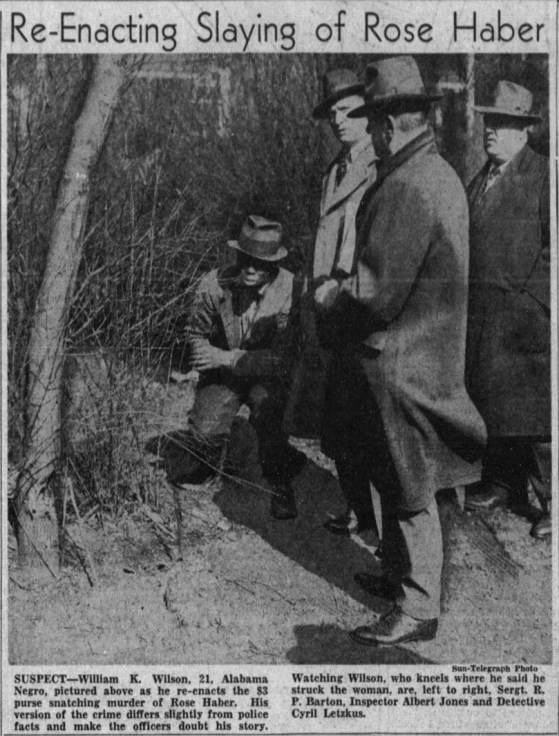
Through a troubling and fast moving series of events, Wilson pleaded guilty and was sentenced to death. He was executed at Rockview Penitentiary, near Bellefonte, on August 10, 1942, three months after being convicted.
 To and From Bellefonte
Leave a comment